Diwali Hindu Festival of Lights

This year the Diwali Melā will take place in the Square at Te Marae o Hine on Saturday 2nd November 2024 from 5:00 pm to 10:30 pm. It will be hosted by Palmerston North City Council and our local Hindu community.
Diwali is the Hindu Festival of Lights. Other communities, such as Jains, Sikhs and some Nepalese Buddhists, celebrate similar festivals on the same days. Diwali represents the triumph of light over darkness, good over evil and knowledge over ignorance. Diwali reminds Hindus to maintain their dharma (duty or good conduct) in daily life.
Diwali is also called Deepavali and is derived from the Sanskrit word dīpāvali meaning a row or series of lights; dīpa means an oil lamp and āvali means row or series. As well as oil lamps, candles and lanterns are used.
Diwali celebrations generally last five or six days. The third day is the climax of Diwali with many considering the night to be the darkest night of the Hindu lunisolar calendar. (This may not be true in the Southern Hemisphere.) Diwali is marked with the lighting of lamps and lanterns, worship and prayer, fire offerings, fasting, charity, cleaning and decoration of homes, fireworks, giving of gifts, feasts, sweets and melā (fairs and shows). At a melā, there may be music, dancing, stalls marketing all manner of produce, fireworks, food stalls, parades and cultural activities.
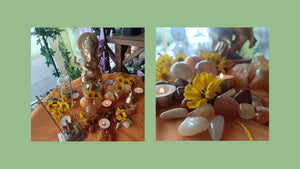
Homes are cleaned ready for Diwali. Homes, temples and workplaces are illuminated with oil lamps, candles and lanterns. Diwali is also celebrated with fireworks. Homes are decorated. Floors are decorated rangoli, which are coloured patterns made on the floor or a tabletop with materials such as powdered minerals, coloured rice flower, coloured sand, flower petals or colourful rocks. Rangoli are most often made for Diwali but can also be seen during other festivals. Rangolis are usually made outside the main door of the house. Homes are also decorated with jhalars, which are strips of colourful fabric.
Diwali is a time of family reunion and many people travel home for the festival. Families usually partake of feasts and share mithai (Indian sweets and deserts) during the festival. Gifts are given and some will send Diwali greeting cards, sometimes with boxes of Indian confectionery, to family members. Diwali is also a time to remember the ancestors and to donate to charities.
Apart from all of the festivities, Diwali is of deep religious significance. It is associated with various religious events, deities and personalities. Notably, it marks the day when Rāma returned to his kingdom in Ayodhyā, with his wife Sītā and his brother Lakṣmaṇa, after defeating the demon king Rāvaṇa. Rāma is regarded as a man of perfect dharma, and for this reason Diwali is a time to reflect upon maintaining our own dharma in daily life. It is also widely associated with Lakṣmī, goddess of wealth and prosperity, and with Gaṇeśa, god of wisdom and remover of obstacles. Other regional traditions venerate other gods and goddesses during Diwali.
Namaste
Frank & Kat
Thanks for sharing your wonderful knowledge Frank, and thanks Kat for the beautiful altar - Michelle